• That’s Not My Name…

    Most of us like to think there’s something unique about us. And there is. Even those of us who say we don’t care about standing out — we still have that one thing. That thing that’s ours.

    For me, my name is the first thing I don’t like people getting wrong. It sets the precedent.

    Now before we go any further — it’s Samantha. Not Sam. And I can already hear some of you going — “Hang on, your name on here is Sammi Joe but you’re telling us your name is Samantha? Make your mind up!” Fair. I’ll come back to that. 😄

    And yes, I know what you’re thinking. What’s the big deal? Sam, Samantha — same thing, right?

    Wrong. And it gets worse. Because it’s somehow even more galling when it happens in a full name context — first name AND surname together. That’s supposed to be your proper, formal name. The grown up version. So to still reach for Sam at that point? Sam Jones instead of Samantha Jones? You had the right format and still got it wrong. That takes a special kind of commitment to laziness. Jones is my married name by the way — but the point stands whatever name I’m carrying.

    And don’t even get me started on a register or a formal document. Your full proper name is right there in black and white and someone STILL shortens it? That one really gets me.

    I should probably warn you at this point — I have two things that bypass all my usual politeness very quickly. Eating sounds. And being called Sam. I’m a fairly calm person generally, but catch me on either of those and all bets are off. If anyone puts Sam Jones on my grave, my spirit will not be at peace. Biblically incorrect as that may be.

    But first, let me tell you about the time I went to the doctor.

    He came out into the waiting room, looked at his list — my full name right there in front of him — and called out “Sam Rumble?” Rumble being my maiden name at the time.

    I looked up at him and said, completely deadpan — “Oh, is that what it says on the name register?”

    He went rather sheepish.

    “Samantha Rumble?” he said. In a question tone. Like he wasn’t quite sure he was allowed.

    “That’s better.”

    You should have seen his face. I’m still not sure if it was fear or inner annoyance at the patient who had the audacity. But I’m a doctor’s daughter. I had the confidence. I used it. No regrets. 😄

    It’s Only Two More Syllables

    I mean, come on. AN-THA. That’s all I’m asking. Two extra syllables. We’re not learning Mandarin here. If you genuinely, truly cannot stretch to the full Samantha — then Sammi Joe works. Sammi with an I by the way, not a Y. I have my reasons. We all want to be a little unique, don’t we?

    But not Sam. Never just Sam.

    And honestly? I could call myself Sammi General and people would STILL find a way to call me Sam. I rest my case.

    Sam Was Someone Else

    Here’s the real reason.

    Sam was the name I went by when I was a different person. Insecure. Making choices I’m not proud of. Living in a way that wasn’t aligned with who I was created to be. Sam wasn’t a bad person — but Sam was lost, and Sam was hurting, and Sam was doing what lost, hurting people do.

    And then God showed up.

    Slowly, steadily, everything changed. The insecurity, the bad decisions, the old patterns — God began to strip them away and replace them with something better. Something more solid. More me.

    And the name I came back to was Samantha.

    Samantha means God heard. And He did. He heard me in the mess, in the noise, in the bad decisions and the quiet desperation. He heard me, He answered, He called me into something new.

    So when someone calls me Sam, it doesn’t just feel like a preference being ignored. It feels like being called back to someone I no longer am. Like being handed an old coat you donated years ago and being told to put it back on. Sam is part of my story — she always will be, and I don’t erase her — but she is not who I am today.

    Samantha is feminine for me. Samantha is chosen. Samantha is heard by God.

    That’s not a small difference.

    And yes, I go by Sammi Joe here. I chose that deliberately. It sits comfortably between the two. Not Sam — never Sam — but not quite ready to put Samantha above the door either. Think of it as the in-between. The journey name. And yes, I see the irony. Also, it seems if it was Samantha, people would definitely more likely change it Sam. Sammi-Joe has less risk. Don’t tell me. You’re tempted to write back and call me Sam now aren’t you, just to spite me?

    And since we’re being pedantic — my full name is actually Samantha Joanne Jones. I wasn’t expecting the doctor to reel all three off, that would just be odd. There are social norms after all. But Samantha. Just Samantha. That’s not too much to ask.

    And if you’re wondering where Sammi Joe actually comes from — well. Samantha Joanne Jones. There it is. It was never random. It was always me, just in a different order.

    Why Do I Keep Mentioning God?

    You might be wondering why God keeps showing up in a post about what people call me. Fair question.

    But for me the two are inseparable. He created me. He chose me. He changed me — with purpose. My name isn’t just a preference, it’s part of that story. And if you’ve landed here and had a look at my About Me page, you’ll already know that faith is woven into everything I write. So He was always going to show up.

    And actually, names and identity are all over scripture. Which brings me to some people who might have felt exactly like I did in that waiting room.

    You’re Not The First Person This Happened To

    God has always taken names seriously. Some of the most significant moments in a person’s journey with God are marked by a name change.

    Take Abram. Faithful, but waiting. Holding onto a promise he couldn’t yet see. And then God meets him and changes his name to Abraham — father of many nations — before he had even seen the fulfilment of what was promised. The name came before the reality. God called him into his future before it arrived.

    Then there’s Jacob. Now Jacob is a fascinating one. His very name meant deceiver — and he lived up to it. He was a schemer, a manipulator, a man who got what he wanted through cunning rather than integrity. But then he had that extraordinary night of wrestling with God, and when morning came, he walked away with a limp and a new name. Israel. One who wrestles with God. Same man, completely different identity.

    Can you imagine, after that, someone strolling up and calling him Jacob? Like nothing had happened? Like he was still the deceiver? I imagine it would have stung in a way that’s hard to articulate. Not just rude — but a denial of everything God had done in him.

    (And if your name is Jacob — I’m sorry. I’m sure you’re lovely. Not all Jacobs are deceivers. Probably.) 😄

    And then there’s Simon. Impulsive, emotional, the one who put his foot in his mouth almost as often as he said something profound. Jesus looked at him and called him Peter — the rock— even before Simon had become anything like a rock. It was a prophetic name. A calling. Jesus wasn’t describing who Simon was — He was declaring who Simon would become. And not just any rock — the foundation on which the entire church would be built. Imagine being given that name. Imagine carrying that calling. Every time someone called him Peter, they were speaking his destiny over him whether they knew it or not.

    Names, in God’s economy, are not throwaway labels. They carry identity. They carry destiny. They carry testimony.

    It Works Both Ways

    I want to tell you about my husband Gareth.

    Gareth means God’s gentle man. And I’m not being biased when I say he absolutely lives up to it — plenty of other people have said the same. He’s six foot tall, and yet there is this quality about him. A gentleness. A kindness. An approachability that just oozes out of him. You feel at ease around him immediately.

    Now, he might argue that his behaviour didn’t always match that. That before God changed him, he wasn’t always living up to the name he was carrying. But here’s what I’d say — you could always see it in him. It was always there. In his eyes, in his presence, in the way people were drawn to him even then. The gentleness was written into him. God just brought the behaviour into line with what was already there.

    And that’s the thing — God works both ways.

    For me, Samantha was always my name. It was always there. But I spent years behaving like Sam — the lost, insecure version — until God called me back to who I was always meant to be. I had to grow back into my name.

    For Gareth, the name always fitted. But he had to grow into it. To become in behaviour what he already was in identity.

    Same God. Same intentionality. Different directions. He just has this way of making the person match the name, or the name match the person, whichever way around it needs to go.

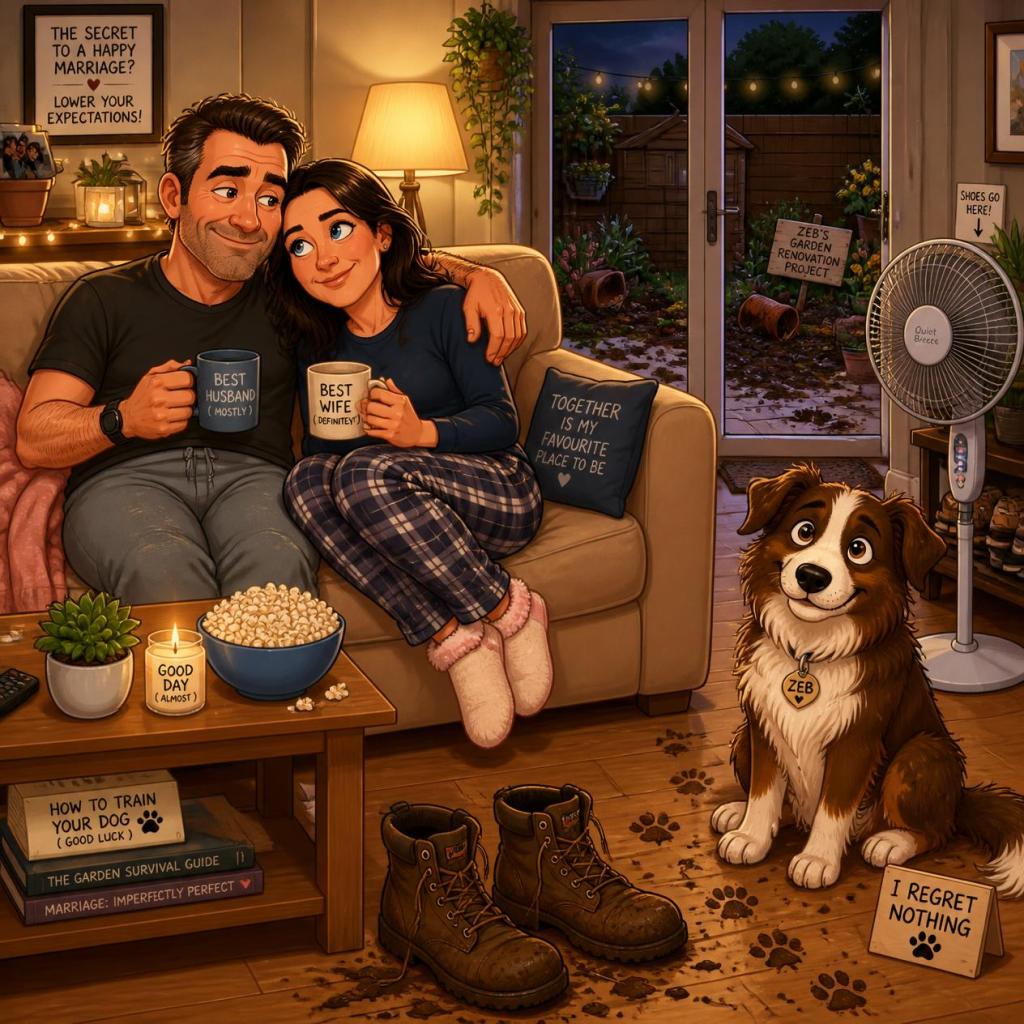
    And then there’s Zebedee. My dog. Named after the father of James and John in scripture — a perfectly respectable biblical name. Except he has absolutely no interest in living up to it. He is, without question, the Zebedee from the Magic Roundabout. All bounce, no dignity whatsoever. He also seems to prefer Zeb. I can’t even win with the dog. 😂🙈

    And Then There Are The Karens

    Can we just take a moment for the Karens?

    I genuinely feel sorry for every woman named Karen who went to bed one night with a perfectly lovely name and woke up to find it had become internet slang for someone demanding, entitled, and permanently ready to speak to the manager.

    Here’s the thing though. Karen, in its biblical roots, carries a meaning that couldn’t be further from that cultural caricature. It speaks of strength, power, and purification. Now I’ll grant you — if you squint hard enough, power might go some way to explaining the manager situation. 😄 But strength and purification? That’s not someone demanding a refund. That’s someone with real weight and dignity behind their name.

    So if your name is Karen — or if you carry any name that the world has decided to redefine, mock, or dismiss — can I just say this: the world does not get the final word on what your name means. Culture is loud, the internet is louder, but neither of them are the authority on your identity.

    Which, actually, is the whole point of this post.

    Names Mean Something

    Whether it’s God renaming someone in scripture, a woman choosing what she wants to be called, or the internet hijacking a perfectly good name — there is always meaning attached. Always identity attached.

    And if you still think names are just labels, consider this — why do people spend years, sometimes a lifetime, tracing their family tree? Why does someone who was adopted feel that deep pull to find out their original surname, their heritage, where they came from? It’s not just curiosity. It’s because something in us knows that a name carries more than letters. It carries belonging. History. Identity. God wired that into us whether we realise it or not.

    You see it all through scripture too. Matthew opens his gospel with a genealogy — a long list of names tracing the family line of Jesus all the way back through the tribes of Israel to Abraham. Luke takes it even further, all the way back to Adam. And I’ll be honest with you — the first time I read it, I thought, seriously, God? Every single name? It felt like the most skippable passage in the Bible.

    But then something stopped me. It was almost as if I felt Him say — would you like me to forget your name? Would you like your story left out? Because that’s what those lists are. They’re not filler. They’re not boring admin. Every name in that genealogy is a real person, a real story, part of the unfolding of His Story. Every single one mattered enough to be recorded. And if He kept track of every name in a bloodline stretching back thousands of years, do you really think yours doesn’t matter to Him?

    And then there’s the woman in the gospels with the issue of blood. She’s never named. Not once. The crowd didn’t notice her, and scripture doesn’t record her name. But Jesus stopped. In the middle of a crowd, He stopped for her. He saw her. He knew her. Her name might not be written in the text — but it was known by Him. And that’s the point. You don’t have to be famous, or recorded, or remembered by the world. If He knows your name, that’s enough.

    Your name can hold your history. It can hold your testimony. It can hold the distance you have travelled from who you once were. And if someone has told you their full, chosen, preferred name, the most respectful thing you can do is use it. Not because they’re being oversensitive. But because identity matters. And the journey a person has taken to arrive at who they are today deserves to be honoured — not casually abbreviated.

    A Question For You

    Do you know what your name means? Where it comes from? Not every name has a direct biblical reference — and that’s fine — but most names have a root, an origin, a story behind them somewhere. It might surprise you. And even if the meaning feels like it has nothing to do with who you are, maybe that’s its own interesting question worth sitting with.

    And whether the meaning resonates or not, here is the bigger question:

    Has God ever spoken a new identity over you? A new way of seeing yourself that replaced the old story you used to carry? A sense that who you were is not the final version of who you are?

    Because that is what He does. He did it for Abram. He did it for Jacob. He did it for Simon and He did it for me.

    If He’s done it for you too — I’d love to hear about it in the comments.

    Your name is not just a label. It’s a story. Make sure you’re living from the right chapter.

  • It’s Just a Dorito. And Yet.

    There is a sound that can ruin my entire day. Yours probably wouldn’t even register it.

    I have misophonia.

    Which sounds dramatic until you realise it just means that certain sounds — specifically other people eating, clanging, repetitive tapping, or basically existing loudly near me — make me want to quietly leave my own life for a moment.

    It’s not a mood. It’s not me being difficult. It is, apparently, an actual neurological thing, which is both validating and completely useless when someone sits next to you with a bag of crisps.

    Now, I should clarify — I am not naturally a patient person. Patience is one of those fruits of the Holy Spirit that God is very much still working on in me. It is a process. A long one. And situations like these are not helping.

    Everything can be completely calm.

    Peaceful, even.

    The kind of quiet where nothing feels rushed and everything just… settles.

    You’re watching something nice.

    Or sitting somewhere quiet.

    Or just existing without any particular issue.

    And then someone starts eating.

    It’s not gradual.

    There’s no gentle build-up.

    It’s like something in your brain just switches.

    Suddenly, you can’t concentrate on anything else.

    Not the film.

    Not the conversation.

    Not even your own thoughts.

    Not Just… crunching, lips smacking or like your food is doing the world tour in your mouth before swallowing. My Dad does that and at these times, our relationship level is at best, questionable! In fact every relationship is.

    And it’s not just “a bit annoying.”

    That would be manageable.

    This is the kind of irritation that feels completely disproportionate and yet — at the exact same time — entirely justified.

    You become hyper-aware.

    Why is it so loud?

    Why is it that loud?

    Has it always sounded like that?

    Surely it hasn’t always sounded like that.

    And the worst part?

    You know it’s irrational.

    You are fully aware that this is a completely normal human activity.

    People eat.

    They’re allowed to eat.

    They’re not doing anything wrong.

    And yet internally, you have transformed into something that could only be described as a mildly restrained rage monster.

    I don’t say anything. Usually.

    Out loud, I remain civil — right up until the point where my nervous system decides that civility is no longer a viable option.

    At which point, all bets are off.

    (See: the Doritos incident.)

    But internally, even on the quieter days, there is a whole negotiation happening between

    “be a reasonable person”

    and

    “please, for the love of all that is good, stop chewing like that.”

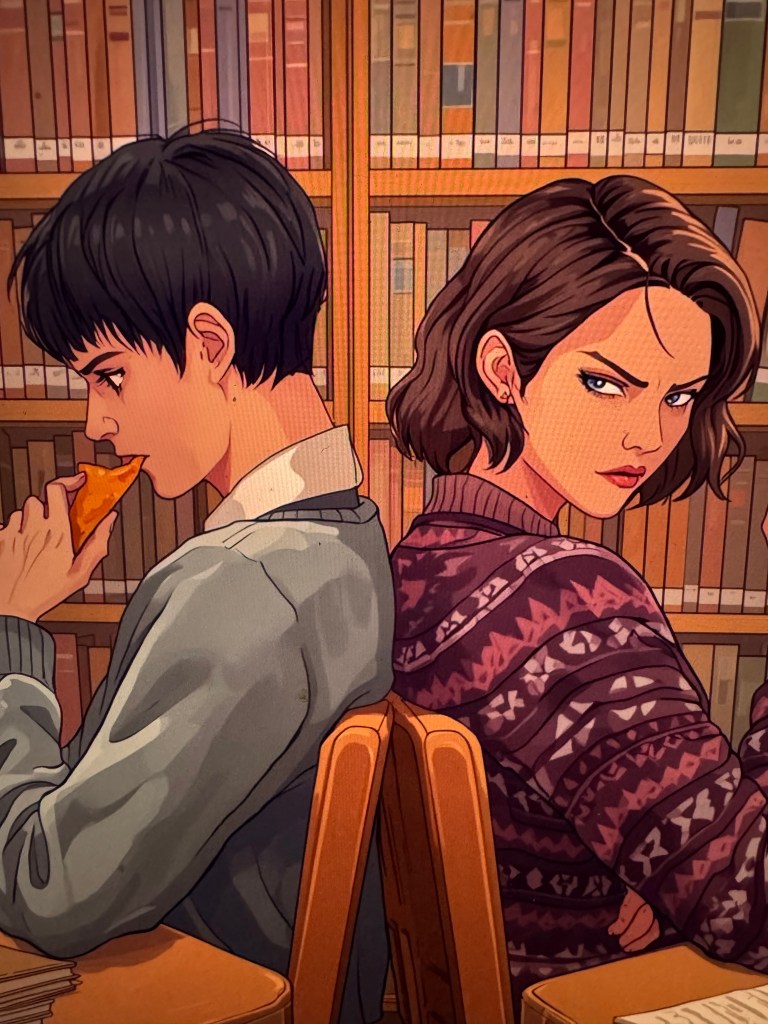
    The worst example of this happened in a library.

    A library. The internationally recognised sanctuary of silence. The operating theatre of academic thought.

    I was studying for my dissertation. This required, at minimum, the kind of quiet usually reserved for lunar surfaces and very serious doctors.

    And then the man next to me opened a bag of Doritos.

    Doritos.

    I turned and looked at him. If you have misophonia, you will know exactly what that look is. It is not aggressive. It is not rude. It is simply a look that communicates, without any words at all, the complete and total collapse of your inner world.

    He saw the look. He acknowledged the look.

    And then he continued eating.

    So I leaned over and said — very calmly —

    “Doritos?!”

    And then: “What is this, a picnic?!”

    He stopped eating.

    What makes it even more ridiculous is this:

    If I am eating at the same time… it’s absolutely fine.

    No issue at all.

    Apparently, the solution to the problem is simply that I must also be involved in the eating.

    Which, as Blod once pointed out, feels somewhat unfair.

    “So it’s fine if you eat, but not if I do?”

    Correct.

    That is, unfortunately, exactly how it works.

    I didn’t design it. I just live with it.

    You know who can eat without triggering my internal meltdown though?

    My dog Zeb

    Zeb, who eats like he’s in a competition and the prize is making as much noise as humanly-

    or should I say, caninely-possible.

    Completely fine. Not a flicker of rage. Not a single twitch.

    I have no explanation for this. My nervous system apparently has a “dog clause” built in somewhere that nobody told me about.

    Blod finds this fascinating. I on the other hand would find it deeply personally offensive.

    Blod made a quiet and life-altering decision early on in our relationship — that eating crisps during a film was perhaps not worth the consequences.

    This was during the dating phase.

    The fact that he still married me after witnessing the look in its natural habitat is something I find both touching and mildly surprising.

    Occasionally, he forgets.

    Hunger, I suppose, does something to a person’s memory.

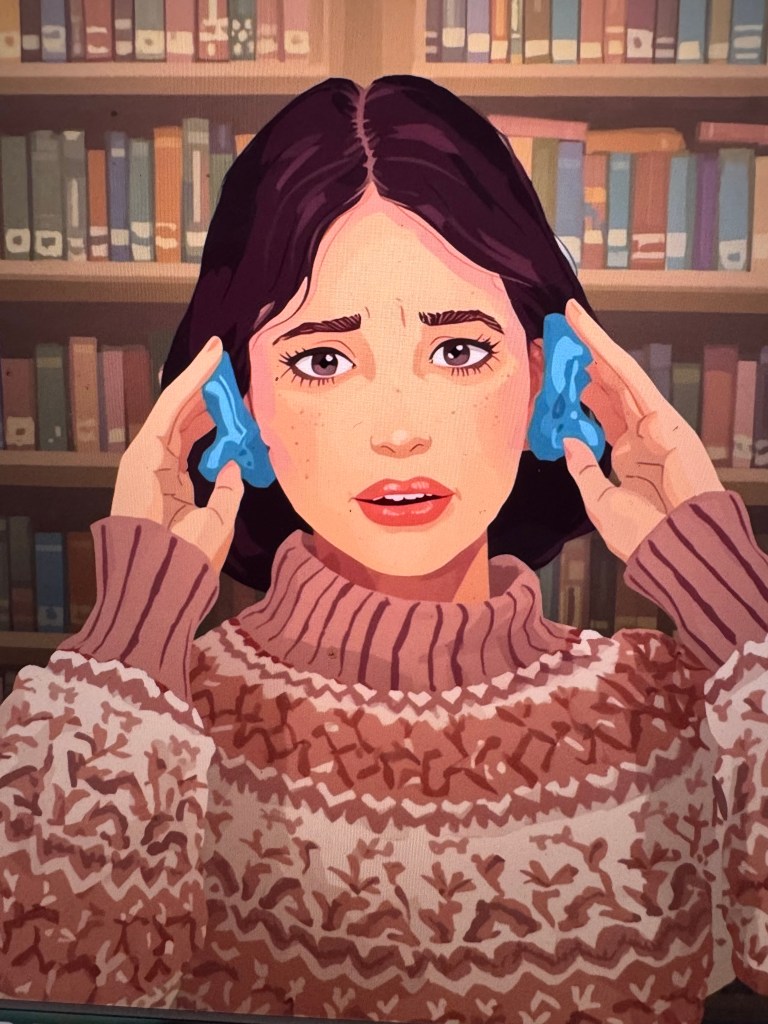
    And then he remembers again — usually around the time I’ve gone very quiet, or started pressing Blu-tack into my ears with the focused calm of someone who is absolutely not calm.

    That is love, actually. Documented and real.

    It’s not limited to eating, either.

    Clanging. Repetitive tapping. Someone doing the same small sound over and over in a place that’s supposed to be quiet.

    It all qualifies.

    Which is why I cannot attend church connect groups when food is involved.

    I have tried.

    I become a version of myself that I don’t particularly enjoy. Internally unravelling while outwardly attempting to look like someone who is fine and engaged and not at all being destroyed by the sound of someone’s wrap.

    It is exhausting.

    And then there are the people who don’t quite understand it.

    “It’s only crisps.”

    Yes.

    I know.

    Logically, I am aware that it is only crisps.

    Unfortunately, my nervous system appears to have interpreted it as something far more serious.

    The strangest part is how instant it is.

    One moment: a calm, relaxed, reasonable human being.

    Next moment: internally calculating how quickly you can leave the situation without drawing attention to yourself.

    It’s not a personality flaw.

    It’s not even really a preference.

    It’s more like a very specific, slightly inconvenient wiring issue that occasionally turns something completely normal into something… not quite so manageable.

    So if you ever notice someone go very quiet the moment you open a snack…

    Or reach for earplugs — or Blu-tack, we’re not fussy — with the quiet focus of someone defusing a bomb…

    Or suddenly remember they urgently need to be in a different room…

    Be kind to them or run. Either works.

    Maybe even offer them some of your food.

    We realise this is not exactly preferable.

    Especially if it’s soup.

    But we didn’t choose this. We are doing our best to avoid incarceration.

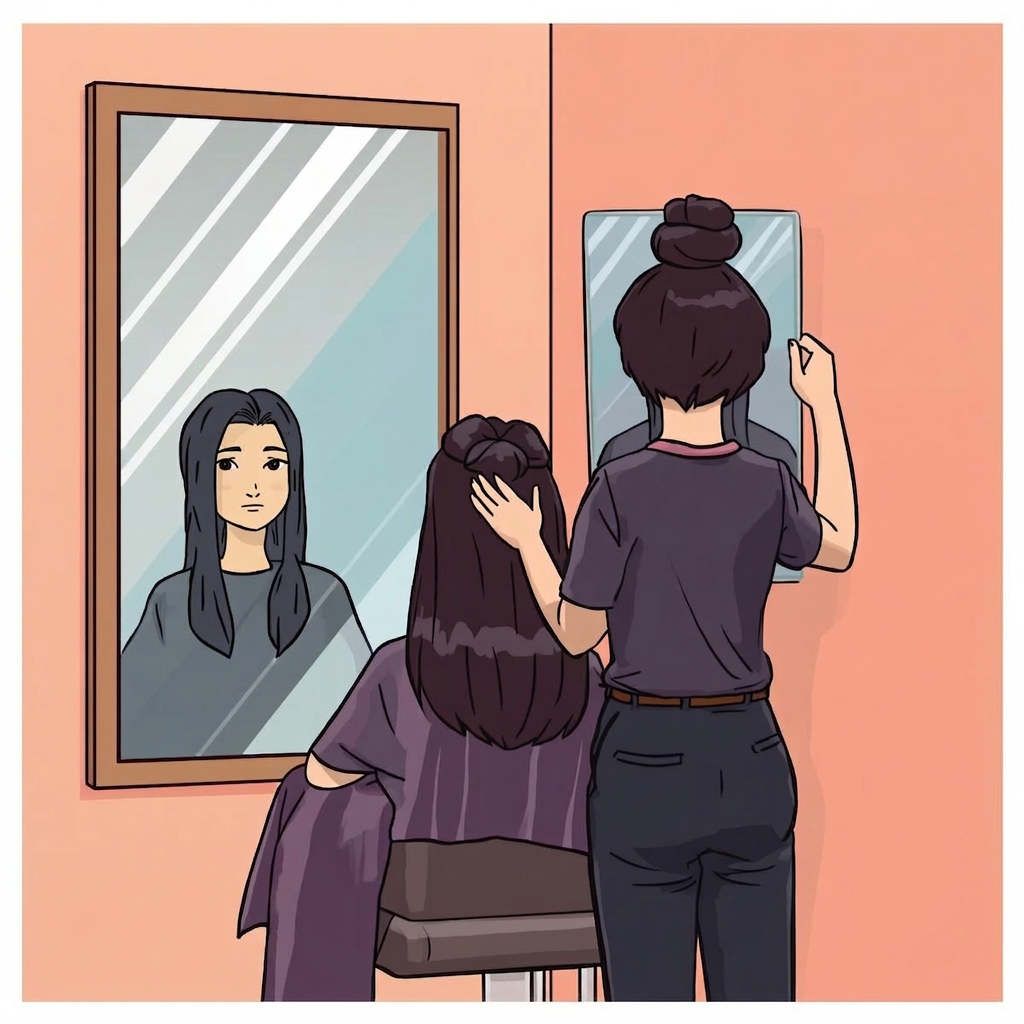
  • Scissors, Tea and Mild Emotional Trauma: Let Me Introduce You to the Hair Salon

    Because apparently, changing your hair fixes everything!

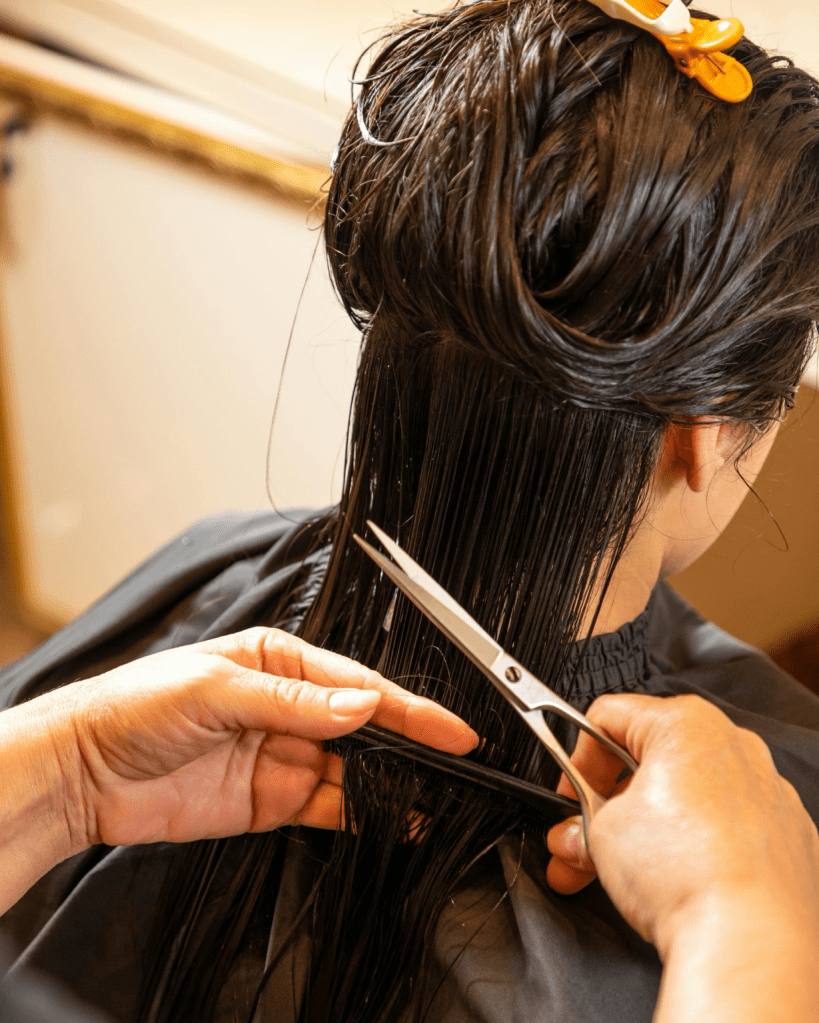
    There’s a strange, unspoken belief—particularly among women—that when life isn’t quite going to plan, the obvious solution is to fix the hair. Not the actual problems, of course. Those can simmer away nicely in the background. But the hair? That needs immediate attention. Because nothing says “I’ve got my life together” quite like sitting in a chair while someone with scissors makes life-altering decisions on your behalf.

    You walk into the salon thinking, This is it. “New hair, new me.” You’re half expecting to leave with improved confidence, emotional stability, and possibly a promotion. At the very least, you’d like to leave looking vaguely like the picture you showed them on your phone.

    And it always begins the same way.

    “Would you like a tea or coffee?”

    The Unreachable Drink

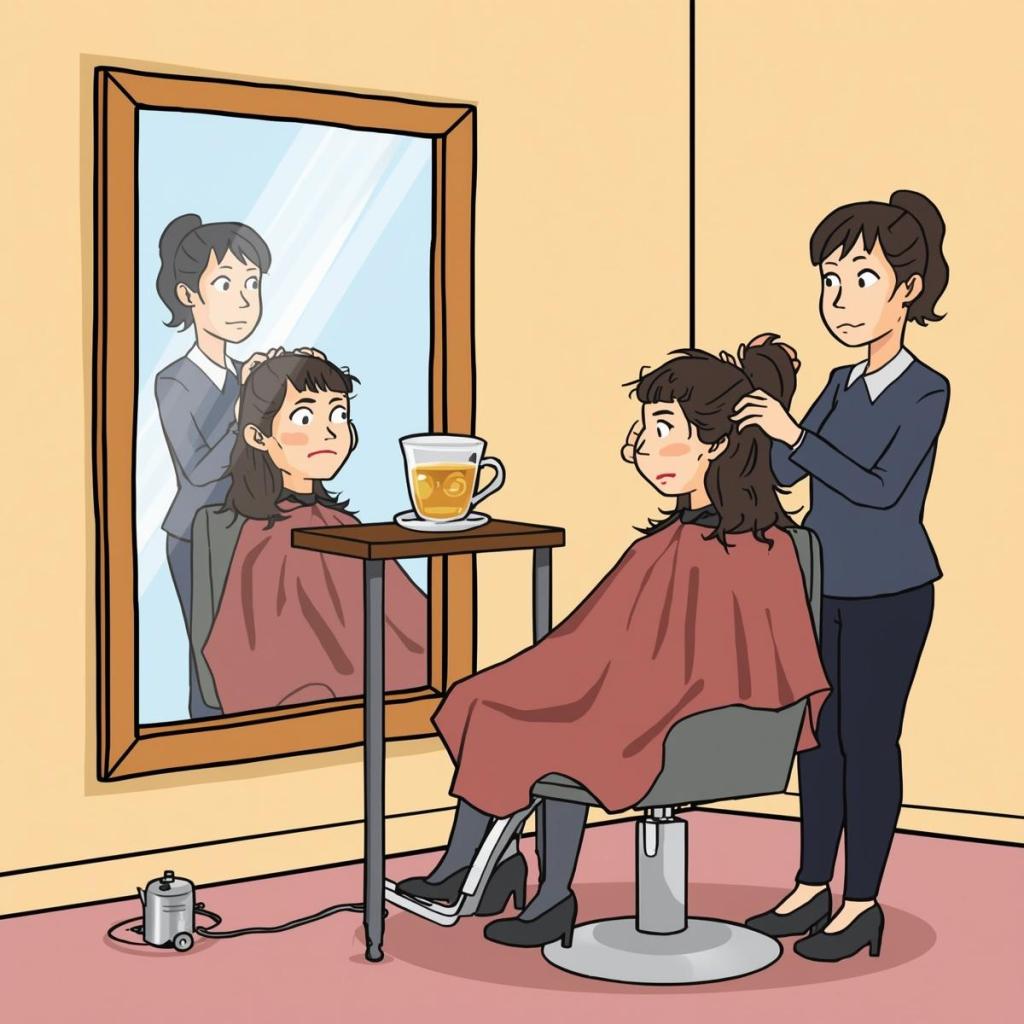
    Now, obviously, you do say yes, because most of us love part of the pampering session to include a lovely beverage. Five minutes later, it arrives and is placed just out of reach while your arms are firmly imprisoned beneath that cape.

    And there you sit for the next three hours, watching it slowly go cold, attempting the occasional subtle elbow stretch in the hope that someone might notice your silent plea. They never do. By the time you finally manage a sip, it’s reached the temperature of mild disappointment.

    I’ve learned from this. I now bring my own cold iced latte in a can. Not because I’m difficult—simply because hydration shouldn’t require a rescue mission. Not being able to access a drink that’s sitting in front of you teasing you isn’t something that I blame the hairstylist for; I mean, they are being nice and oh so hospitable, but I find it a repeatable point of amusement. Do hairdressers not know this? I’m very surprised no one has come up with a practical solution for Dragon’s Den. Investors. An extendable attachment from the table with a sippy straw.

    The Alpaca Incident – 1998

    My first real lesson in hairdresser diplomacy came back in 1998. I went in for what was described as a “do something slightly different but make it good.” Had I known I would come out looking like an alpaca, I would have stayed home with my own hot drink!

    The stylist decided to scrunch-dry my hair. Now, anyone with naturally curly hair knows this requires soaking wet strands and a generous amount of mousse. Instead, it was attempted on partially dry hair, resulting in an explosion of frizz so impressive it could probably be seen from space. Not only that, but the guy had cut it to a length I did not volunteer for. My mum had just paid £70 for the privilege—an extortionate amount at the time—and I was then presented with the mirror.

    “So, what do you think?” he smiles, totally unaware of the crime he had just committed.

    What did I think? I thought I might need to relocate and start a new identity. But in true British fashion, I smiled weakly with my insides crying and said, “Yeah, it’s great, thank you.”

    I left the salon, asked my mum to pass me a scrunchie immediately, and tied it up. I think she was just as in denial as the hairdresser, as she acted annoyed at me hiding the sculpture she had paid for. I didn’t release it back into the wild for several weeks.

    For years afterwards, I perfected the art of nodding enthusiastically at hairstyles that bore absolutely no resemblance to what I’d asked for, mainly because I didn’t want to upset someone who was still holding scissors near my ears. Self-preservation, really.

    The Safe Years

    Thankfully, there was a peaceful period when my stepsister, who is a brilliant hairdresser, took charge of my hair. She actually listened, which, as it turns out, is quite a rare and delightful quality. My hair remained safe, healthy, and recognisable. It was a golden era in what can only be described as my follicular journey.

    The £200 Disaster

    Then, about twenty years after that original frizz catastrophe, I decided—foolishly—to try somewhere new. This particular stylist charged around £200 for a cut and colour. Despite my very clear instructions not to layer my hair in certain areas, she did exactly that. What is wrong with these people!

    I left the salon feeling as though the only appropriate accessory would be a paper bag. You know it’s bad when you start planning your route home based on the likelihood of encountering people you know, only to get home and my husband says nothing. Poor bloke was waiting for me to compliment him on cleaning the entire house and ordering a takeaway, and he gets a homecoming from a wife who now needs her hair tidied up.

    The £300 Blonde Ambition

    Not long after, I visited another salon with the idea of dealing with the orange tone in my hair from a keratin treatment (don’t ask) and getting it blonde again. The stylist confidently quoted a price of £300. Three hundred pounds. For that amount of money, I expected not just good hair but emotional healing and perhaps a small holiday.

    Of course, I refused to pay that price, and I was ready to walk out the door—and SHOULD HAVE! So the price had been negotiated to a more reasonable offer.

    But the real drama came when he decided the best course of action was to bleach most of my hair in as many foils as possible.

    Not a few highlights. Not a gentle transition. He wanted to use all of the foil in Mr Tin Man’s shed!

    “No,” I said, with the calm certainty of someone who has seen this film before and knows exactly how it ends.

    He looked at me, slightly offended. “Why don’t you let me do my job?”

    I decided on the most obvious reason. “Because it’s MY hair, I guess, and I also want to keep it on my head.” So I came out with frazzled ends at the frame of my face, which I had already warned him were fragile and not to touch with bleach.

    Thankfully, I had rescued another brutal haircut when I viewed, like in cinematic slow motion, the pull of the crown section of hair—hands gliding upwards, with the scissors aimed at lobbing a good 2–3 inches off. “Noooooooo, don’t cut that off, stop.” He stopped, hence just layering the front round the face. Seriously, I should be an advocate for the victims of hairdressing disasters.

    Finding the Right Hairdresser

    Eventually, I found a lovely hairdresser who genuinely knew what she was doing. She explained that in order to achieve the rich brown shade I wanted, we’d first need to go through a slight tint red stage. I left the salon feeling slightly startled but reassured, trusting the process and, more importantly, trusting her.

    During this appointment, I was offered not one, not two, but three cups of tea—all of which sat just out of reach while I remained trapped beneath the cape. At this point, bringing my own drink felt less like a preference and more like a survival strategy.

    The Mirror Ritual

    And then, of course, comes the final ritual: the mirror.

    “What do you think?”

    You’re handed a small mirror and expected to assess the back of your own head—which can often not be seen because the angle always seems off-placed.

    “Could you just move it a bit? I can’t quite see the back.” The mirror is manoeuvred side to side until you confidently approve. “Ahh yes, that’s a lovely back of head, thank you.” Often it takes several twists and turns of the mirror. Wait, why am I looking at the back of my head again?

    I definitely, in many respects, have gained confidence in speaking out in the hairdressers. It’s either being post-40s or just the long list of disasters that I just cannot go through it again, because then I pay twice.

    On one occasion, I even asked to borrow the straighteners to tame a stubborn section of frizz myself. Not because the stylist wasn’t capable, but because I finally trust my own understanding of my hair. It’s amazing how empowering it feels to take control of your own fringe.

    A Note on Hairdressers

    I should add that I’m fully aware that many hairdressers work incredibly hard and aren’t exactly rolling in it. For the good ones—because they are out there—behind the prices we see are professionals trying to earn a living, often within salon structures where they don’t receive the full amount clients pay. When someone genuinely looks after me, I’m more than happy to support them.

    But even with that understanding, there’s still that moment of shock when you hear the price. Then again, it’s not just hair—petrol, groceries, everything has gone up. I won’t go there yet. We all understand why!

    More Than Just Hair

    There’s something deeply symbolic about changing your hair. Often, it reflects a desire to regain control when other aspects of life feel uncertain, or perhaps even an attempt to change something within ourselves. You go in hoping for transformation and come out feeling, at the very least, a little fresher and more like yourself again—provided it actually looks good.

    Because that’s the truth of it. A trip to the hairdresser won’t change your life. It won’t solve your problems or magically turn you into a new person. But if it turns out well, it can make everything feel just a little bit more manageable.

    And if it doesn’t… well, there’s always the scrunchie. After all, it’s my hair.

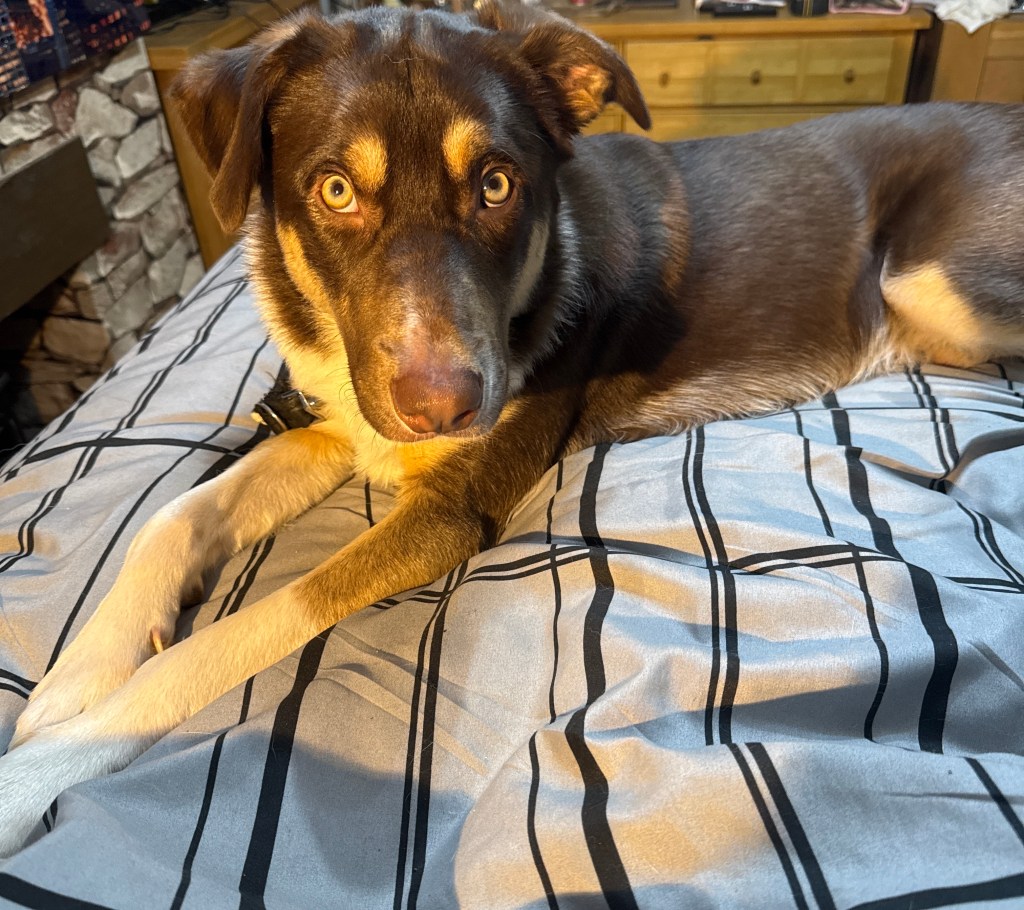
  • The Dog Who Thinks He’s Walking Me

    You know when your dog tries to drag you down the road, attempts to dismantle your sanity, and makes you question every life decision that led you to owning him…

    …and then five minutes later looks at you like this?

    Like he’s never done a single wrong thing in his entire life.

    This wasn’t even a peaceful field walk either.

    This was a round-the-block situation.

    You’d think that would be easier.

    No.

    Apparently not.

    When I got him, I thought it would be nice, peaceful walks around the country park.

    No.

    That is not how this turned out.

    It actually ends up with me dreading the walks, feeling like I need to hit the wellness section in the supermarket for a bottle of Kalms.

    There I am, holding him in, my arm taking the strain, while he’s scanning the environment like it’s his full-time job to locate chaos.

    And if I didn’t keep hold of him?

    He’d absolutely try and launch into full zoomies mode at the worst possible moment… straight towards whatever’s moving.

    Cars included.

    Lovely.

    Now I can already hear people thinking,

    “Why are you even walking him round the pavement then?”

    Good question.

    Catch-22.

    Because if I do—

    he’s got cars going past, and he’s movement triggered so anything that moves is apparently his responsibility. Brilliant.

    But if I don’t—

    he never learns how to deal with it, and the one time he does end up near a car without me properly managing it? Disaster waiting to happen.

    And then there are the claws.

    If I don’t walk him on harder ground, they grow like he’s preparing for some kind of medieval battle, and he ends up walking funny.

    But can I just take him to a normal groomer?

    No.

    Because he thinks every human being exists purely to be launched at with the highest enthusiasm 

    Which, apparently, groomers don’t appreciate.

    So… here we are.

    Damned if I do, damned if I don’t.

    And let’s not even start on the “say hello to everyone” phase.

    Other people out on their walks, minding their own business—or worse, the ones who actually want to say hello to a Border Collie/Welsh Sheepdog.

    He would, if given the chance, lick them all over and probably go home with them.

    But you see… we’ve been here before.

    One time he was so scatty he literally wrapped a woman’s legs in the long lead.

    A stranger.

    I don’t think she’ll be wanting to say hello again.

    One inch of slack on that lead, and suddenly he’s like,

    “Perfect. Freedom. Time to behave like an absolute lunatic.”

    Then we get home.

    I think, “Right, safe space, back garden—we’ll calm down.”

    Do we calm down?

    No.

    Because the second that lead loosens slightly, he decides he’s basically off-lead and goes full rampage mode, like he’s auditioning for a wildlife documentary.

    Zoomies. Chaos. Limbs everywhere.

    At one point he got a bit carried away with himself…

    So I rein it back in, get him settled, give him his little… whatever that thing is.

    Hoof. Foot. Claw. Who knows.

    Slight tuggy.

    And then—

    Just like that—

    He settles.

    Lies down.

    Soft eyes.

    Angel.

    Aren’t you, baby?

    Yes, you are.

    Well…some of the time.

    Because let’s be honest—

    sometimes he looks at me with that little sideways glance like,

    “Yeah… I’ve got you wrapped round my paw.”

    You little menace.

    And the worst part?

    It works.

    Because one look at that face…

    …and I still absolutely love him.

  • Lessons from my dog Zeb: Forgiveness, Trust…and Relentless Toy Negotiations

    This month Zeb turns one.

    Which feels like a good moment to reflect on the many unexpected things a slightly chaotic, extremely loyal dog can teach you about life.

    I didn’t set out to learn life lessons from a dog.

    In fact, if you had asked me during the early days of trying to train Zeb to wait patiently before a walk, I might have suggested that he had been sent purely to test my patience.

    Getting ready for walks used to look less like calm training and more like interpretive dance. Zeb bouncing. Me trying to attach a lead and stop what can only be imagined as a dog on a neurotic spring.

    Me attempting to maintain some dignity and failing miserably to keep some form of verbal tone control in the kitchen.

    From the other room, my husband would sometimes just start laughing.

    Apparently what he was hearing sounded something like this:

    “Good boy… yes… very good boy…”

    “Zeb… wait…No…Come here NOW…Sit Down…..SIT Down and WAIT you absolute nutter, no that’s my FOOT”

    ..…and then, almost immediately:

    “Oh that’s it! Good boy! Yes! Very good boy!”

    Gareth speaks through the wall. “I don’t know whether to laugh or suggest some medication for you, or maybe for the dog?”

    One could see his point and I could only resort to laughter seeing the picture.

    It’s a constant juggling act between trying to be the calm, in control dog trainer…and suddenly realising you’ve turned into an unhinged, impatient SAS trainer.

    So yes. On a few occasions, I’ll admit, I completely lost my patience and raised my voice.

    He’d stop for a moment, look at me a little cautiously, ears slightly back, as if trying to work out what had just happened.

    But then the door would open.

    And the moment we stepped outside, he’d look up at me with that intense, joyful expression that says:

    “Right then. Adventure time.”

    No grudge.

    No emotional scorecard.

    No silent treatment.

    Just complete forgiveness and the same eager anticipation as always.

    If humans forgave that quickly, the world might look very different.

    The Morning Stretch Philosophy

    Every morning when Zeb wakes up, he comes over and does the same routine right in front of me.

    He stretches.

    Properly stretches.

    Front legs out, back arched, the whole dramatic performance like a tiny Pilates instructor starting the day.

    And then he looks at me with that eager expression that basically says:

    “Right then. Let’s go. Today’s going to be good.”

    No replaying yesterday.

    No worrying about tomorrow.

    Just stretch… reset… and anticipation.

    Meanwhile I’m standing there thinking:

    “I need coffee before I can even anticipate my day.”

    Zeb wakes up expecting good things.

    Humans usually wake up preparing for problems.

    Maybe the dog has the better system.

    Trust Isn’t Instant

    It took quite a while to convince Zeb that his crate wasn’t some sort of terrible betrayal.

    Early attempts involved a lot of tactical manoeuvres — dives under the table, gentle collar grabs, and carefully guiding him inside while he attempted to negotiate alternative arrangements.

    When you get an intelligent sheep dog breed, you imagine them understanding what you want. Not understanding it….storing it as information and cunningly using it against you, like this.

    “Zeb, settle”

    “Zeb Bed” “Bed” “Bed”

    Zeb settles under the table like a negotiation.

    “Ahhh ok I’ll be good, promise, I’ll just lay under the table I promise”

    “Ok now I can play”, No, ok stay here.”

    Until he gets his collar grabbed and ultimately ends up there anyway.

    But over time something changed.

    Consistency does that.

    Now he walks into his crate on his own because he knows it’s safe. It’s his space. His place to settle.

    Trust wasn’t instant.

    It was built in hundreds of small moments where nothing bad happened and everything stayed predictable.

    And once that trust formed, the bond became incredibly loyal.

    Sometimes when something startles him — even something as ridiculous as a leaf blowing the wrong way — he runs straight between my legs into “middle”, because that’s where he feels safe.

    Trust like that isn’t demanded.

    It’s earned.

    Relentless Toy Negotiations

    Zeb also believes very strongly in three important life principles:

    1. Forgive quickly.

    2. Trust deeply.

    3. The toy should always be thrown again.

    If you say no, he waits, eyes playfully scanning for any weakness, with that hopeful innocent look.

    If you still say no, he waits closer.

    “Human not responding, repeat.”

    If you still say no, the toy will be gently placed on your foot as if to say:

    “Perhaps you misunderstood the assignment.”

    His persistence is remarkable.

    If I pursued my creative projects with the same determination Zeb applies to toy negotiations, I’d probably be a six-figure entrepreneur by now.

    Somehow, without a formal meeting or written agreement, Zeb has also negotiated our household roles.

    I tend to do the walking.

    My husband tends to do the night-time play sessions.

    And somewhere in the middle of all that, one of us is usually slightly zoned out while Zeb patiently waits for his preferred activity to resume.

    He’s surprisingly good at managing the rota.

    Strategic Weeing

    Zeb has also perfected what I can only describe as “strategic weeing”.

    If he can’t be bothered to stay outside, he’ll perform a very quick, very unconvincing administrative wee and then look at me as if to say,

    “Right. That’s the administrative requirement fulfilled. Shall we go back in now?”

    Only to be directed back to the grass for a second, third and fourth wee.

    Loyalty Means Knowing Their Needs

    At one point Zeb developed a sore patch on his leg after spending two nights away from us at a dog carer’s place.

    It wasn’t that he had been mistreated or anything like that. More likely it was simply the change in environment and being away from his people. Somehow he ended up self-soothing in the wrong way — pulling some of the hair out of his leg and licking it.

    The result was the dreaded cone of shame.

    And if you’ve ever seen a dog trying to navigate life in one of those things, you’ll understand the comedy element.

    Zeb suddenly became incredibly clumsy and spatially unaware, walking into furniture, door frames, and occasionally objects that had absolutely no business being in his way.

    He’d turn his head and thunk.

    Try to walk past something and clonk.

    It was like living with a slightly confused satellite dish.

    But my heart went out to him.

    Underneath the comedy there was something else.

    It reminded me just how deeply dogs bond with their people.

    Sometimes he just looks at me with an expression I can’t quite explain.

    Complete trust.

    Complete loyalty.

    As if he’s saying,

    “Wherever you go, I’m in.”

    That’s why it hits so strange, almost wrong, whenever I know Zeb is going somewhere overnight now. My heart sinks a little.

    He sees me getting his stuff in a bag and it’s like he knows because his energy shifts to a bit heavy.

    I feel strongly protective of him and a little bit sad for him too. Not because he’s being mistreated, but because I know how much he prefers being with us.

    I’m sure every owner connected to their pooch understand this—

    He really is my baby dog.

    And we are very clearly his people.

    Loyalty like that comes with responsibility.

    When an animal trusts you that deeply, it matters that the people caring for them understand their needs and routines.

    Trust isn’t just what they give us.

    It’s what we honour in return.

    And somehow, amongst all the chaos, bouncing, negotiations and strategic weeing, this dog has also managed to teach us quite a lot about loyalty, trust and patience. Oh the patience.

    This month, on the 15th March, Zeb turns one.

    I suspect there are many more lessons to come.

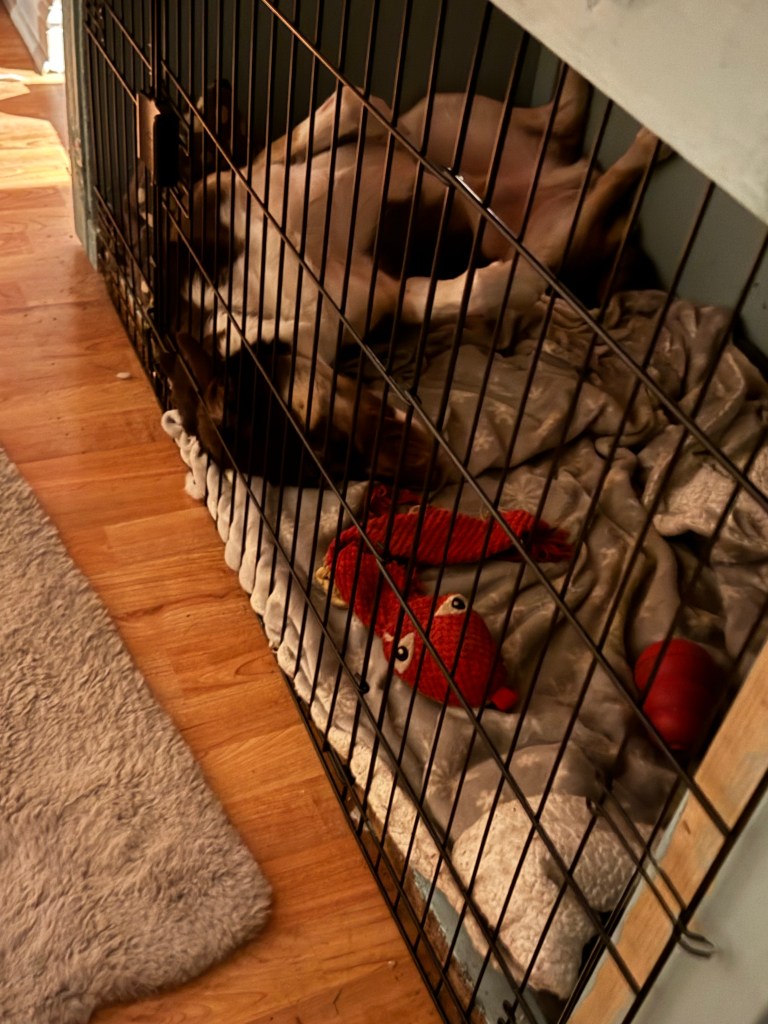
    The same dog who once refused to go anywhere near his crate…now fast asleep in it.

  • ✨ When Delay Becomes Direction ✨

    It was a Friday afternoon.

    Nothing dramatic.

    Nothing unusual.

    Just the clock ticking while my mind tried to hold too many things at once.

    I was halfway through client calls, trying to hold work in one hand and the rest of my life in the other. My brain was busy, stretched, already carrying more than it should. My husband had tried earlier to squeeze in a quick conversation about our property plans — not because he was being pushy, but because we were both juggling so much that neither of us quite knew where the right space was anymore.

    Working from home makes me more “reachable,” and sometimes that blurs the lines. I wasn’t unavailable because I didn’t care; I was simply in work mode, mid-responsibility, mid-pressure. And he wasn’t being demanding — he was trying to find a moment where we could connect about the dreams we both share.

    Two people with big visions.

    Both stretched.

    Both trying.

    Meanwhile, Zeb was staring at us like, “Cool story. Is my dinner happening or not?”

    And then something simple cut through the noise.

    It wasn’t dramatic.

    It wasn’t angry.

    Just honest.

    It wasn’t the message itself that shifted me — it was what it exposed.

    He shared that he didn’t feel fully connected to the journey. That he needed to know we were walking it together.

    And I understood it.

    But beneath that moment was something deeper that had already been stirring.

    For weeks, I’d been trying to move something forward — a project that had come to me so easily at first. The name had flowed. The idea had felt clear, almost effortless. That felt like God.

    But the momentum since then?

    That felt different.

    Every step forward felt heavier than it should.

    Not locked. Not slammed shut.

    Just… unmoving.

    And that frustrated me more than I wanted to admit.

    I wrestled with it quietly.

    Was this resistance because I was meant to push through?

    Or was it resistance because I was pushing something that wasn’t meant for now?

    There’s a difference — but in the moment, it’s hard to tell.

    Part of me wondered if I was being tested.

    Part of me wondered if I was being redirected.

    Part of me feared I was falling behind.

    And if I’m honest, I felt a little alone in it too — trying to manufacture momentum in my own strength because I thought that’s what progress was supposed to look like.

    But as I sat there, instead of defending my position, I paused.

    Not emotionally.

    Not reactively.

    But intentionally.

    What was actually happening here?

    The truth was simple:

    It wasn’t moving.

    And faith doesn’t ignore reality.

    It weighs it.

    If God was breathing on this right now, would it feel like I was dragging it uphill alone?

    I didn’t need to quit the dream.

    But maybe I did need to stop dragging it forward before its time.

    Because sometimes delay isn’t denial.

    Sometimes it’s direction.

    So I made a decision.

    A clear one.

    A grounded one.

    I chose to stop forcing something that wasn’t moving.

    And I chose something else too.

    I chose us.

    Not because one of us was doing more than the other — we’ve both been building, both investing, both stretching in different ways. But because I wanted to demonstrate, in a tangible way, that we are a team. That I am for him. That what we’re building is something we’re building together.

    Not separate visions competing for oxygen.

    But shared direction, aligned.

    Not by sacrificing a dream.

    But by recognising the season.

    And that shift changed everything.

    At our deal packaging training, the coach shared her “why” — showing the house she bought because of property. Her stepping stone. And something inside me lit up.

    A country home.

    My country home.

    A dream I hadn’t abandoned — just quietly shelved somewhere along the way. Somewhere between striving and trying to prove I could build something on my own timeline.

    And I realised something gently but deeply:

    When I stopped obsessing over the door that wasn’t opening, I could see the direction right in front of me.

    This doesn’t mean the other dream has vanished. It hasn’t. It came in flow for a reason. But the timing isn’t mine to force.

    I can still nurture it quietly.

    I can still hold it loosely.

    I just don’t need to push it.

    Sometimes the most spiritual thing you can do

    is pause long enough to recognise the difference

    between resistance that requires faith

    and delay that requires wisdom.

    This wasn’t the end of a dream.

    It was simply the moment delay clarified the direction.

    We became aligned again.

    The tension eased.

    The pressure lifted.

    And peace replaced striving.

    For now,

    I’m choosing clarity.

    I’m choosing unity.

    I’m choosing what’s moving — not what I’m trying to move.

    And honestly?

    It feels right.

  • Confirmation Bias, Steam Rooms & A Pair of Goggles

    This is one of those stories where you think you’re in the right… then realise you’ve just followed man in Speedos through a leisure centre… convinced he’s a swimming accessory thief.

    This was about a couple of years ago in a swimming pool — and it still perfectly sums me up.

    I’m at the pool, about to get in after what was supposed to be a relaxing steam and shower.

    Now, I’ll be honest — I didn’t even really want to come swimming. I debated it for ages.

    But I knew I needed it — because if I don’t get my exercise, I don’t get calm… I get ratty.

    So I’d already had a whole internal negotiation just to be there.

    I reach for my goggles.

    They’re not on the hook with my cap.

    Annoyance kicks in instantly. Not panic. Not fear. Pure, simmering irritation.

    Because I NEED this swim.

    I retrace my steps. Scan the pool. Check the benches. The floor. My bag. They are nowhere.

    And I KNOW they were here.

    And then I spot him.

    A man walking away from the shower… wearing goggles that look exactly like mine.

    So, I do the polite British thing.

    “Excuse me… you haven’t seen any goggles lying around anywhere near here, have you? They look identical to yours.”

    “Er… no, sorry.”

    (He looks a bit sheepish. In my opinion. And once my brain decides that, it starts building a case.)

    I walk away thinking: That’s weird. Because I KNOW they were here. And I’m pretty sure those are mine.

    Now I’m annoyed AND suspicious. Dangerous combination.

    So I follow him up the stairs.

    “I’m really sorry to bother you, but are you SURE you haven’t seen any goggles that look like yours?”

    “No, I really can’t say I have.”

    He heads towards the male changing rooms…

    And I stop in the hallway like a confused Roomba. (Which I believe is a robot hoover. Either way —lost.)

    Because now the inner argument begins.

    One voice: Go on. He’s nicked your goggles. Stand up for yourself. Other voice: Do NOT be that woman. You’ll become a leisure-centre urban legend.

    This is where my husband would usually say,

    “I’ll just let you carry on between you and you.”

    So I pace. I circle. I mutter internally.

    Then the ratty, exercise-deprived voice joins in:

    You didn’t even want to come swimming and now this has hacked you right off. Go on. Knock.

    So I knock.

    He comes out looking genuinely concerned that he’s being stalked over aquatic eyewear.

    “I know this is probably getting annoying, and I’m really sorry, but I KNOW I left my goggles downstairs. Are you sure one of your friends didn’t pick them up by accident?”

    “No, I really haven’t seen them. And my friends just sit in the steam room. They don’t even use goggles. But I hope you find them.”

    “Right… okay… that’s just really weird. Sorry again. Enjoy your shower.”

    At this point I resign myself to:

    1. He is a committed criminal

    2. Someone else took them to lost property

    Either way, I’m too annoyed to swim now.

    So I go to steam off instead.

    I walk to the steam room door…

    and in the reflection of the glass I see them.

    My goggles.

    Around.

    My.

    Neck.

    Poor man.

    If there’s a lesson in this, I suspect it’s this:

    I don’t actually need to fix this part of myself.

    The overthinking.

    The apologising.

    The internal debates conducted entirely in public spaces.

    Because without it, I’d never have this story.

    And that poor man would never have spent ten minutes wondering whether he’d accidentally stolen a woman’s goggles — while she was wearing them like a necklace.

    That said…Once your brain decides it’s right, it will happily gather evidence, ignore reality, and emotionally prosecute an innocent man in Speedos…

    While the actual problem is literally hanging off your own body.

    Which is to say — sometimes the issue isn’t them.

    It’s you.

    And your goggles.

  • Five Hours Later: It’s a Tech Thing

     I started a reel ad on Canva.

    (Not an advert for Canva. Me and tech are currently in a trial separation.)

    I mean — how hard can it be?

    Image. Music. Words. Colours.

    This is not brain surgery. Though if it was, I’d still appreciate a manual.

    Five and a half hours later I’ve lost audio, lost synchronisation, watched one page delete the next, and discovered that my AI assistant needs more assistance than I thought I needed.

    I am now questioning my life choices, my calling, and whether I should live off-grid with no Wi-Fi and a typewriter.

    I remember during my degree saying,

    “Is it just me, or is no one else completely panicking about this?”

    Tabitha smiled and said,

    “No, Samantha. We’re all panicking.”

    “You just… do a very good job of expressing it for us.”

    I feel like Rose in Titanic:

    “It’s been 85 years… and I can still see the cog spinning.”

    This is the mess in the middle.

    The bit no one posts. The bit where you’re trying very hard to be a grown adult while also internally bracing yourself and wondering how something so small has taken over your entire day.

    I remember why I’m doing this — which is the only reason I’m still here, pressing on to the promise that I will become all He created me to be.

    So what if the current version of me looks like a sleep-deprived raccoon with a thousand-yard stare, waiting for the computer to respond? I’ll just blend in. Perfectly normal behaviour.

    There’s a gap between who I’m called to be and who I am when technology stops cooperating.

    I do the things I don’t want to do and don’t do the things I know I should, like remaining calm, emotionally regulated, or particularly dignified.

    I didn’t avoid tech because I couldn’t learn it.

    I avoided it because it reveals things about me I’d rather not meet unsupervised.

    Zeb now has that look that says, “I love you… but I’m not getting involved.”

    It’s a fight between “what if I’m not good enough?”

    and “get a grip — you cannot let fear win over a reel.”

    I keep going anyway.

    Not because I’m calm —

    but because I remember why I started.

    I started this because I wanted to create moments — space for others to pause, reflect, and be present. A small, intentional place for a meaningful moment, wherever that happens to be.

    I created the blog to let the creativity in me breathe, and to connect — honestly — with others along the way.

    I created it without needing to define exactly what it will become, trusting it to grow into whatever it’s meant to be, in obedience to the calling placed on my life.

    Of course, the flesh had opinions.

    So, in perfect obtuseness, I did it anyway — my inner critic can remain unelected.

    The journal that came out of this season is here, if you’d like to take a look: here

  • A Year of Love, Chaos and Unscripted Interruptions

    A candid photo of me and my husband Blod,  smiling together.

    This year was my first year of marriage — marriage itself has been a gift, even if the year wasted no time throwing everything else at us.

    My husband, who I usually call Blod, it should be said, handled it like an absolute legend — in the sense that you’d like to believe people do,

    after weeks of that strange New Year build-up where everyone keeps asking what you’re looking forward to,

    whether you’ve got plans, and gently implying that something excellent is about to happen.

    Don’t get me wrong, I understand why we do it —

    hope matters, and it does arrive in many different forms.

    Good things do come.

    Growth comes.

    Unexpected kindness comes.

    But there is still something quietly absurd about how we repeat the same ritual every year: gathering round a countdown, making declarations of health, happiness, and fresh starts,

    and acting genuinely surprised when life doesn’t follow the script exactly as imagined;

    Only to be met almost immediately with a very emphatic reminder that life doesn’t consult your expectations

    before making its entrance.

    Instead, it turns up like a well-meaning but slightly intrusive relative, interrupting the conversation mid-sentence and asking,

    “Chickenpox, anyone?”

    Blod got it.

    Not the polite, childhood version — the full adult edition. The sort that looks unnecessarily dramatic and teaches you very quickly what “in sickness” actually means.

    I learned how to care properly, have a few quietly unhinged moments of panic (mostly kept to myself), and discovered that Googling symptoms at 2am is never a neutral activity.

    At first, we were convinced it was an allergic reaction to my lemon shower gel — which he is actually allergic to.

    The shower gel was immediately thrown out, obviously.

    We even ended up in A&E;, fully prepared to explain our theory, only to find out that no, it wasn’t the shower gel at all.

    It was chickenpox.

    Proper chickenpox.

    An unnecessarily dramatic opening act to the year.

    And that was how the year introduced itself.

    (Understandably, the lemon shower gel was sacrificed. However, please respect the grief of Lemon Source shower gel. It had no warning of such a brief goodbye after all its years of service. We had plans!)

    Not long after that, we felt led to move on from our church. There was no drama and no blame — just a clear sense that the season had changed.

    The church family I was part of in Norwich, before I met Blod, are still very much home to me.

    They saw me grow through singleness and into marriage, and they’ve been nothing but warm, accepting, and encouraging of Blod and me together.

    Their prayers, support, and steady presence have continued from a distance, and they’ve been a genuine source of strength this year.

    Since then, we’ve been walking through a season of trusting God without neat answers.

    Letting go of what I thought things were supposed to look like has been uncomfortable but necessary.

    Staying grounded in faith while variables shift, standing on God’s Word when clarity hasn’t yet arrived — that’s been real faith this year.

    Then we got chickens.

    Then — because apparently we enjoy escalation — we got a dog.

    The garden did not survive.

    There was one moment that perfectly summed up this season:

    Blod accidentally dropped a KFC chip on the floor.

    What followed can only be described as a full Benny Hill–style chase scene, with chickens sprinting incircles, flapping wildly, chasing each other with complete commitment over one stolen chip.

    I stood there watching, laughing, and quietly accepting that this was now my life.

    My marriage to Blod has been one of the most grounding and joyful parts of the year. It’s full of affection, laughter, and genuine friendship.

    After years of mistrust in relationships, I’ve been learning how to manage conflict without immediately fearing rejection.

    We’re human, flawed, and learning to fully become one— but learning together, which makes all the difference.

    Also, Blod is an elite-level sleep talker.

    Not the mumbling kind. The confident, articulate, fully conversational kind.

    I’ve been given instructions, asked questions, and informed of urgent matters in the middle of the night — all delivered with absolute conviction.

    He remembers none of it.

    I unfortunately for him,

    remember all of it.

    I find this endlessly entertaining.

    He remains blissfully unaware.

    Marriage comes with perks.

    Our dog Zeb, meanwhile, has absolutely no understanding of personal space.

    None whatsoever.

    Hi, I live here now. This is my face.

    However, he is learning calmness — roughly one minute at a time. Progress is still progress.

    Running underneath everything this year has been a quiet, persistent discomfort — the knowing that there is more than our jobs.

    Knowing what God has spoken over your life, yet not seeing the when or the how, can be deeply frustrating.

    But Scripture reminds us:

    “Though the vision tarries, wait for it; it will surely come.”

    In November, Blod encouraged me to go to a money-making summit. We both went. I signed up for mentorship with their Inner Circle.

    Later that day, I encouraged Blod to do a property course.

    That’s how we work — he believes in me,

    I believe in him.

    That season is where this blog began — alongside a few other creative ideas that are still finding their feet.

    We are all birthing something, whether we realise it or not.

    Maybe 2025 was the year the concepts were formed.

    Maybe 2026 is the year they’re born.

    For now, this is still unfolding. A little chaotic. Often funny. Deeply meaningful.

    And very much

    Perfectly Unfinished.

  • So Let’s Talk About Christmas

    So, let’s talk about Christmas — seeing as it’s very much on everyone’s mind at the moment.

    We can’t move for it can we. Conversations, adverts, countdowns, opinions. Everyone’s either “so excited” or “completely done already”, and somehow both at the same time which probably tells you where I’m going with this.

    I absolutely don’t hate Christmas.

    I just don’t understand the pressure we put on it.

    We talk about it for weeks like it’s a thing we have to get right.

    People say things like:

    “Are you ready for Christmas?”

    Ready for what?

    It’s a Tuesday with a roast and administrative stress.

    Or:

    “Ooo, are you excited?”

    Am I excited to spend a lot of money, see everyone at once, and feel vaguely responsible for everyone else’s emotions?

    Not especially.

    Then there’s always someone who says:

    “You just have to get into the Christmas spirit.”

    Do I?

    Is that something I order online, or does it arrive naturally once I’ve queued in a supermarket listening to Wham?

    Because I’m not against joy.

    I just don’t think it comes on a schedule.

    I used to cope with it by getting drunk.

    That worked. Temporarily.

    Everything feels more festive when you’re slightly numbed and making questionable decisions.

    I don’t drink anymore — and I’m genuinely thankful for that.

    Being permanently set free from waking up thinking,“Oh no… who did I text last night and what painfully intense truth did I unleash?”

    is not something I miss.

    At all.

    Now I experience Christmas fully sober, which means I feel everything.

    I’ve noticed Christmas has this strange ability to turn the volume up on whatever you’re already carrying.

    If you’re happy, you’re very happy.

    If you’re lonely, it’s louder.

    If you’re grieving, it’s sharper.

    If you’re anxious — congratulations, it’s now a feature presentation.

    And don’t even get me started on New Year’s Eve.

    Same speeches.

    Same countdown.

    “Next year will be better!”

    Will it though?

    I mean, statistically speaking, parts of it will be.

    Other parts will be an absolute mess.

    Humans fail something by default every year — it’s kind of our thing.

    But we also overcome a lot every year too, which never seems to make the highlight reel.

    However, buried underneath the sequins and shouting is the idea that we’re allowed another go.

    A second chance. Or a tenth. Or, realistically, a fiftieth.

    That part I like.

    What I don’t love is the way it’s shouted at midnight like a legally binding contract.

    As if you’re not allowed to quietly hope.

    I’ve always been the one at New Year’s parties hiding in the kitchen doing the washing up.

    Not because I hate people enjoying themselves —

    but because that’s where people stop pretending for five minutes.

    I don’t begrudge anyone who genuinely loves Christmas or New Year.

    If it lights you up, if it feels true to you — honestly, carry on I’m not here to burst bubbles.

    What I don’t love is the way these seasons can accidentally exclude people who want to be real.

    The ones who want to hope quietly.

    The introverts. The reflective ones. The ones just trying to get through.

    There are bits of Christmas I genuinely love.

    The pretty lights.

    The tree.

    The cosiness.

    Even the fake niceness, if I’m honest.

    Yes, I know that makes me a bit of a hypocrite. I’ve complained about Christmas for years and still put a tree up and bought presents.

    This year feels different though.

    This year will be the most free Christmas I’ve had.

    No festive debt built up.

    No January regret.

    No standing there on Boxing Day holding a jacket I paid £85 for,

    watching it appear online for £20,

    and telling myself,

    “Well… it was worth it for Christmas Day.”

    It wasn’t.

    It was a jacket.

    I wasn’t intending to donate money to retail optimism,

    but here we are.

    Tomorrow I’ll spend it with my husband.

    No Christmas film marathon.

    We’ll probably end up “having a quick chat” about future creative business ideas,

    which will somehow turn into a full strategic discussion with imaginary whiteboards,

    big dreams, and at least one moment where we say,

    “Right. Let’s stop. It’s Christmas.”

    And, inevitably, watching Zeb scrape frantically under the sofa,

    convinced the remaining two-inch scrap of bone or his tug toy has definitely, absolutely, 100% reappeared where it has not.

    What I actually miss about presents isn’t the stuff.

    It’s what they represent.

    That someone thought of you.

    That someone chose something for you.

    That brief moment where your face lights up — or you convincingly pretend it does.

    Because if I’m honest, it really is more of a blessing to give than to receive.

    And that’s the heart of the Christian message too.

    That life itself was given as a gift.

    Not earned. Not performed for. Not dependent on how well you’ve done this year.

    Just given.

    Maybe that’s part of the point of Christmas too.

    Maybe all the pretending, the effort, the dressing things up for one day

    isn’t always denial — sometimes it’s survival.

    For some people, that one day is a break from a year that’s been overwhelming.

    A chance to step into a different space.

    To let things be okay, just for a moment, even if they’re not the rest of the time.

    And I get that.

    The only problem is that not everyone can pretend.

    Not everyone gets a pause.

    Not everyone can switch things off for a day and feel festive.

    For those people — genuinely — I hope you find some corner of peace,

    some quiet moment, some place where you can breathe,

    even if it doesn’t look like Christmas is supposed to.

    And for those who do find it joyful —

    who love it, who feel lifted by it, who look forward to it all year —

    please enjoy it. Fully. Without guilt.

    Those moments matter too.

    And even for the Grinches —

    the ones like me, hovering somewhere in between —

    I hope there’s laughter, or rest, or something unexpectedly good. However it looks for you.